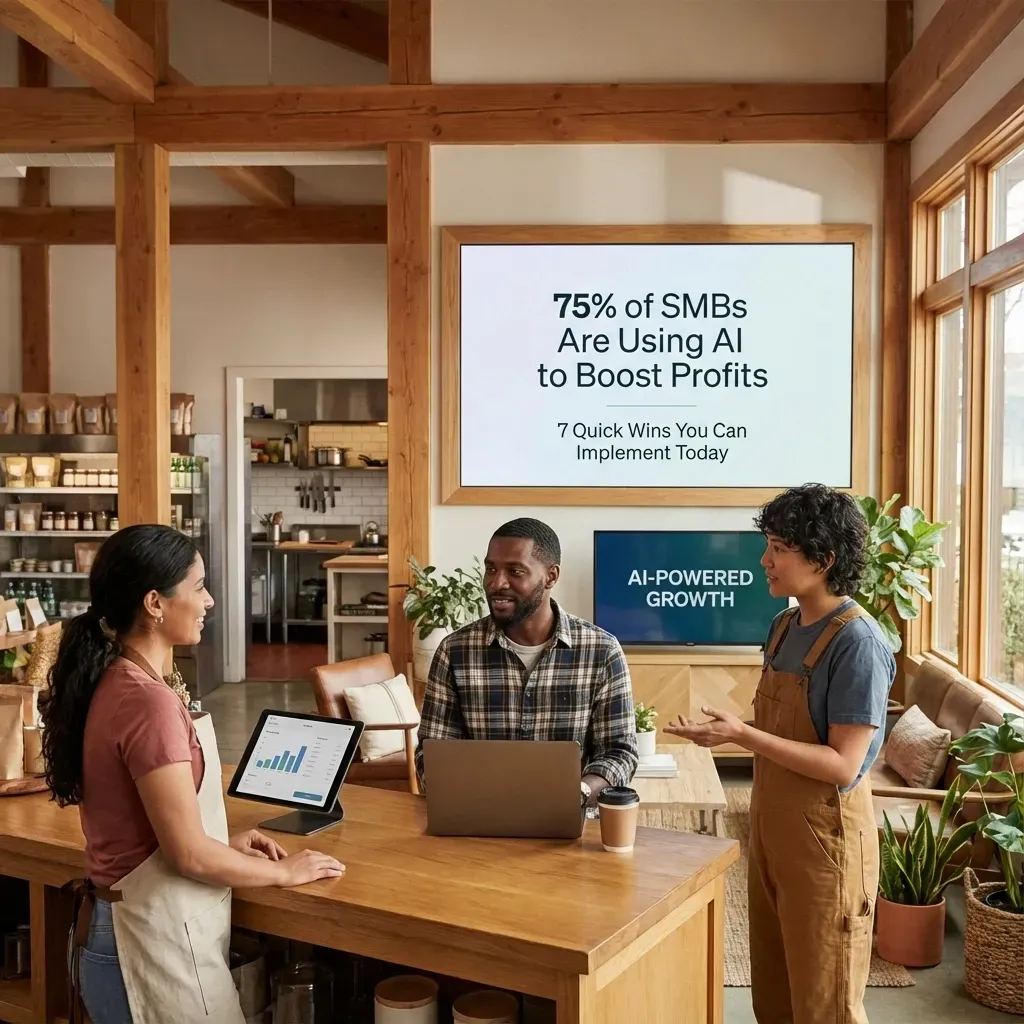
75% of SMBs Are Using AI to Boost Profits: 7 Quick Wins You Can Implement Today
75% of SMBs Are Using AI to Boost Profits: 7 Quick Wins You Can Implement Today
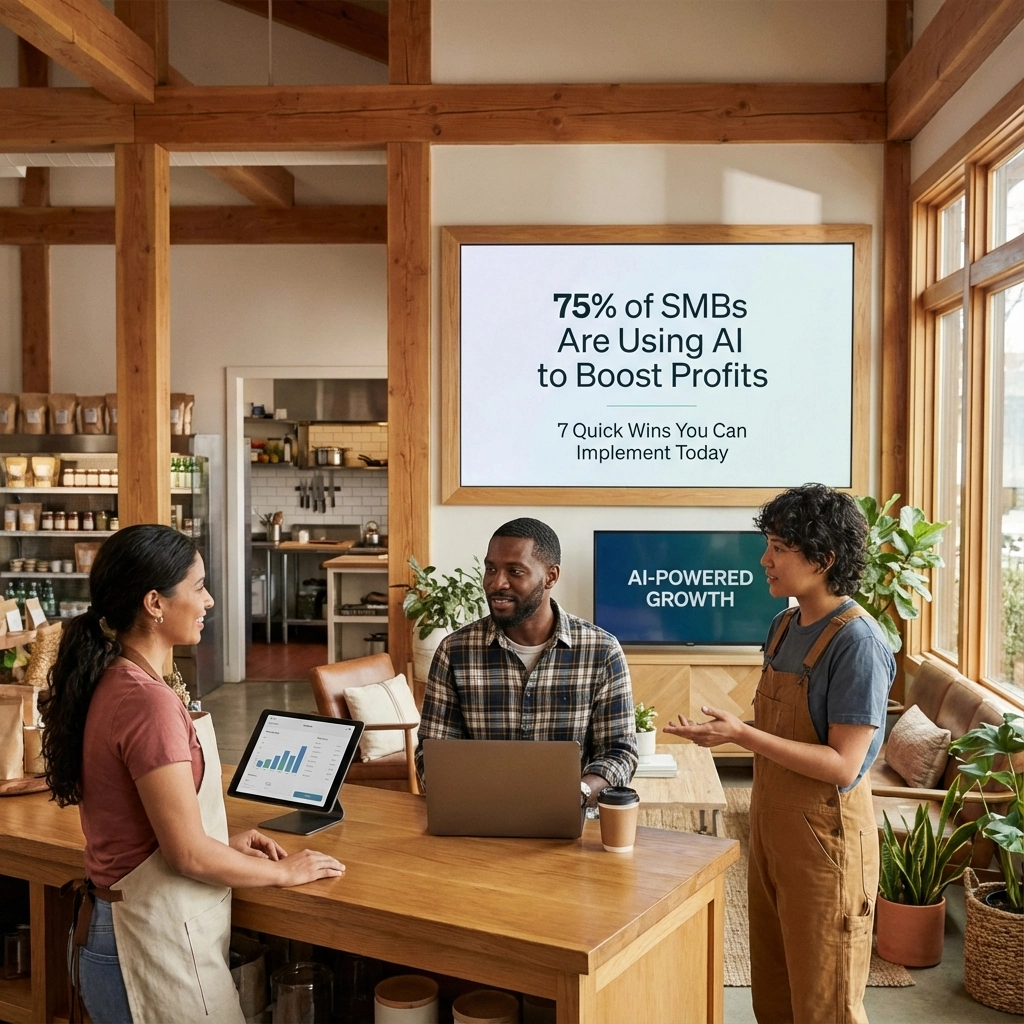
The numbers don't lie: 75% of small and medium businesses are already putting money into AI, and those investing are nearly twice as likely to experience growth compared to businesses that aren't. If you're in that $400K-$5M revenue range, you're at the perfect inflection point to leverage AI without the massive overhead that larger corporations face.
But here's what's really driving results: 85% of SMBs using AI expect a solid return on investment, and 90% report their operations are more efficient. This isn't about futuristic robots taking over; it's about smart automation that frees your team to focus on what actually moves the needle.
Why SMBs Are Winning Big With AI
The sweet spot for mid-market businesses is implementing AI strategically rather than comprehensively. You don't need enterprise-level solutions that cost six figures. You need targeted wins that deliver immediate impact to your profit pillars.

The businesses seeing consistent growth understand something crucial: AI isn't replacing human expertise: it's amplifying it. When your team spends less time on repetitive tasks, they have more bandwidth for strategic thinking, customer relationships, and revenue-generating activities.
7 Quick Wins You Can Implement This Week
1. Automate Your Marketing Sequences
Marketing automation is the most common AI application among successful SMBs for good reason. Set up intelligent email campaigns that trigger based on customer behavior, schedule social media posts that engage at optimal times, and create targeted content delivery systems.
Immediate Impact: Reduce marketing team hours by 15-20 weekly while improving conversion rates by 25-40%.
Implementation: Start with one customer journey: new lead nurturing or post-purchase follow-up. Tools like ActiveCampaign or HubSpot offer AI-powered workflows that require minimal technical expertise.
2. Deploy Intelligent Customer Response Systems
While larger companies have adopted chatbots extensively, small businesses still lag in this area, creating a competitive advantage for early adopters. Implement AI-powered customer service that handles routine inquiries instantly.
Immediate Impact: Reduce response times from hours to seconds, improve customer satisfaction scores, and free up 10-15 hours weekly for your customer service team.
3. Transform Data Into Actionable Insights
Stop making decisions based on gut feelings. AI analytics platforms can process your customer behavior, sales trends, and operational metrics without requiring a dedicated analytics team.
Immediate Impact: Identify your most profitable customer segments, predict seasonal demand patterns, and spot revenue opportunities you're currently missing.

4. Personalize Customer Experiences At Scale
Implement recommendation engines that tailor product suggestions and customize services based on individual customer preferences and purchase history. This "know your customer" approach dramatically increases loyalty and repeat purchases.
Immediate Impact: Increase average order value by 15-30% and improve customer lifetime value through more relevant offerings.
5. Eliminate Administrative Time Drains
AI can handle data entry, invoice processing, report generation, and calendar scheduling. Getting even one team member back 5-10 hours per week creates substantial productivity gains that compound across your organization.
Immediate Impact: Reduce administrative overhead by 20-40% while improving accuracy and consistency.
Strategic Stillness Benefit: When your team isn't buried in paperwork, they have mental bandwidth for strategic thinking and innovation.
6. Optimize Pricing and Inventory Intelligence
Use AI to forecast demand accurately, adjust pricing dynamically based on market conditions, and manage inventory levels more efficiently. This prevents both stockouts that cost sales and overstocking that ties up cash flow.
Immediate Impact: Improve profit margins by 8-15% through optimized pricing and reduce inventory carrying costs by 20-25%.
7. Accelerate Employee Development
Deploy AI-powered training platforms that onboard new employees faster and upskill existing team members more effectively. While most small businesses lag in training investments, early adoption positions you ahead of competitors fighting for the same talent pool.
Immediate Impact: Reduce new employee time-to-productivity by 30-50% and improve team capabilities without external training costs.

Breaking Through the Relevance Barrier
The primary obstacle isn't cost or complexity: 82% of very small businesses report they don't believe AI applies to their operations. This mindset creates opportunity for businesses willing to start small and demonstrate quick wins.
The solution is picking one high-impact use case, measuring results carefully, and building momentum from there. Success breeds confidence, and confidence drives broader adoption.
Addressing Security and Implementation Concerns
Valid security concerns shouldn't paralyze progress. Modern AI tools come with robust data protection and compliance safeguards built in. Start with AI applications that don't involve sensitive customer data: like marketing automation or internal process optimization.
Risk Mitigation Strategy:
Begin with one low-risk application
Choose reputable vendors with strong security track records
Implement gradual rollouts with clear success metrics
Maintain data backups and rollback procedures

The Competitive Reality
The gap between small and large business AI adoption has shrunk dramatically over the past year. Small businesses are only 12-18 months behind enterprise adoption rates, which means there's still time to gain competitive advantage: but that window is closing.
71% of small businesses plan to increase AI investment over the next year, while only 4% are scaling back. The question isn't whether your competitors will adopt AI; it's whether you'll be leading or playing catch-up.
Making It Happen: Your Next Steps
Start with your biggest operational pain point. If customer service overwhelms your team, begin with chatbots. If marketing consumes too much manual effort, implement automation sequences. If data analysis feels impossible, deploy AI analytics.
Proven Implementation Framework:
Identify: Choose one process that consumes disproportionate time or resources
Pilot: Implement AI solution for 30-60 days with clear success metrics
Measure: Document time savings, efficiency gains, and profit impact
Scale: Expand successful implementations to additional areas
Optimize: Continuously refine based on performance data
The businesses winning with AI aren't waiting for perfect conditions or comprehensive strategies. They're starting with targeted wins, building confidence through results, and scaling systematically.
Your Competitive Advantage Starts Now
78% of SMB leaders using AI consider it a game changer: but only if you actually implement it. The difference between businesses thriving in the next three years and those struggling to keep up will largely depend on how quickly they integrate intelligent automation into their profit pillars.
This isn't about replacing human expertise; it's about amplifying what your team does best while eliminating what drains their energy and focus.
Ready to identify which AI applications will deliver the highest impact for your specific business model? Our profit leak assessment reveals exactly where intelligent automation can boost your bottom line: usually within the first 30 days of implementation.
The race isn't between humans and AI. It's between businesses that leverage AI strategically and those that don't. Which side of that equation will you be on?
